Friday, March 1, 2019

Sitayana by Amit Majumdar - My Review


Think of India and its ancient epics/stories for a few seconds. If your brain did not pick up Ramayana and Mahabharata in those few seconds, please stop reading right here and feel free to go back to what you were doing. Both these epics are inseparable from India. And, any kid that grew up in 1980 or earlier would not have slept in the night at least a day without hearing stories from these great epics (today's life is different, parents are busy and the kids have their own preference for stories). How many retellings for these epics. Did the story ever change? No. But, what makes every retelling unique. There could be multiple reasons, but the one that comes on top of my mind is the author's imagination. Come, let us go further and see how yet another retelling of the great epic Ramayana by Amit Majmudar looks and feels like.


Firstly, who is playing the leading role in Ramayana? Rama obviously. Isn't it? Amit has taken a diversion here to name his book as Sitayana (though this is not the only book out there under this name - K.R.Srinivasa Iyengar named his book as Sitayana). I have listened to discourses on Ramayana and there are many of them suggesting that Valmiki gave many names to this epic including Sitayana, Sita Charitam etc., but finally settled down with Ramayana. In fact, this whole epic is centered and weaved around Sita, and so Sitayana is very much correct and acceptable. We must appreciate the author for choosing this name.

Next, Ramayana is usually a sequential story (Mahabharata is little different where there is a story inside a story inside a story... and so on). Every time you hear that from elders, or you take a book and read, the story is not going to change, but can bring different perspectives. That's exactly where the author has scored points. Many appreciations are due to the other for conceiving the retelling like this. It is the same epic, but as you read, you hear it directly from the ones that are part of the epic itself.

Have we ever known from our earlier hearings on how naughty Sita was? Or, have we ever read about what she was fed, what she was taught and was capable of and so on? Possibly no. When you hear directly from Sita when the book starts with her, you are more than interested and inspired to read it. There is enough humour in each and every chapter - the secret whisperings between Sita and Urmila during the swayamwara is just a hint of what is waiting for you throughout your read. The dialogue between Mandodari and Sita gives many deeper perspectives of both the positive and negative aspects, which we never have come across before. The belief that Mandodari has on her husband comes out very strong in the author's words.

Usually, the interactions that we know between Hanuman and Sita are pretty rudimentary. But, when you read those chapters where they interact it is much more - what's in their heart - a lucid conversation. You will have to make sure that you are secluded and in a separate room when you are reading the happenings in Ravana's court when Hanuman was caught and enquired there. Such a great wit with which this was written that you will laugh like anything. Vibishan, usually known to be a silent, smart and polite character and Indrajit, Ravana's son known to be strong, gets their due in this great book. Nowhere else will you see the in-depth depictions of these two, sidelined but powerful characters. The writings on these two are filled with lot of inner meanings rather than a usual just-for-a-novel like bare sentences.

Shurpanakha, Jambavan and Kumbhakarna all get their chance to talk in this great book. Ravana's own words establish what this great epic is meant for - everyone is born with both human and rakshasa character, and it is the great mix that does the magic. Indra and Valmiki also become part of this retelling which adds great value to the book itself. If the author has dedicated a chapter for what a squirrel and the mount Sanjeevini that play small role in this great epic, then the author needs no further praise (read this in a positive way)! And, there is a bit of ice age too when the squirrel takes the stone and thinks that it is a walnut :-)

The language that is used is elegant - not very simple, but definitely not very complicated; but, apt enough to carry the deeper and inner meanings of the conversations between different characters and what's in their mind in a unique way. The anecdotes and the analogies used throughout the writing exemplifies the efforts that the author has put. The exquisite nature of the characters and the environment comes out brilliantly in the same way. This one is not just a simple retelling. It is much more than that. Kudos to Amit Majmudar for having such an exceptional imagination to depict the always-known-and-heard-several-times Ramayana!

Sunday, September 30, 2018

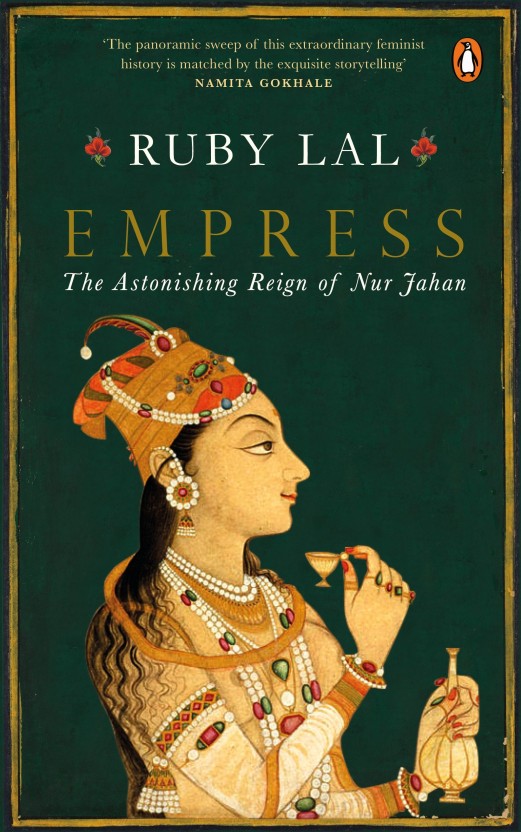
Empress: The Astonishing Reign of Nur Jahan by Ruby Lal - Review

At a time the whole world is talking incessantly about inclusion and diversity that includes equal employment for women, equal pay for women, Ruby Lal has come up with this great biography of Mihr-un-Nisa. Ah, my fault! We won't recognize her unless I use the name 'Nur Jahan' here. Never would most of us have thought that it requires a whole book to describe "The Astonishing Reign of Nur Jahan". Yes, I am using the same phrase that Ruby has used, because that is the most apt term and I or most of us will not be able to think anything better (I certainly could not think of anything better than this).


It would have become little difficult for the readers if the author directly went on to explain the unparalleled rule of Nur Jahan; the author being experienced in history realized this completely, and so has crafted the those introduction chapters beautifully well, so the readers will have the complete picture of her birth and her rise to the throne. For many readers, it might be overwhelming when the authors go in depth into who ruled Persia, who ruled India, the route that Nur’s parents took to reach India or who led that caravan. But, these are all the major things – the attention to minute details like this that separates a book and this book from everything else.

Ruby has quoted extensively from various sources to give a complete picture of Nur Jahan’s life. Whether it is the political shrewdness, her hunting skills, or her conquering various battles. No one should miss the chapter ‘Ascent’ and that one, probably by a cognizant decision occupies the middle pages and strengthens the book by connecting the earlier and the following chapters. The political alliances, how she helped various people and how ‘Light of the palace’ became ‘Light of the world’ are elucidated well in these pages. The chapter ‘The Rescue’ gives a detailed account of Nur’s abilities to plan meticulously to rescue Jahangir from the opponents.

As you proceed and read towards the end of the book, you feel the inevitable – a strong respect for the great empress that India had seen during the Mughal reign and possibly the only great empress the world has seen as well (I have heard about Cleopatra, but have not read about her in detail yet).

Few salient points about the book itself: The first thing that captures your mind in this book are the carefully selected magnificent images from various sources.  As I have mentioned in my previous reviews, the success of the book can be easily measured by how far the author succeeds in bring the images and visuals live in the eyes of the reader when he/she reads the book. Not every author succeeds in that. It is very evident to see Ruby’s hard work, research and the time she spent for bring out this marvel, because you can sit and see those events in front of your eyes when you are reading the book. The language used is very rich yet simple enough for everyone to understand and enjoy the exhaustive account of Nur Jahan’s life. The only thing that you must be aware is that this is a biography of the women who influenced and ruled the empire alongside her husband, which means that there are multiple other actors and happenings expounded to a great extent and some people might find it overwhelming. I will give more than a five stars for this marvel.

Sunday, July 8, 2018

Job Be Damned by Rishi Piparaiya


It is part of most of our lives. It is something most of us hate every minute, but cannot accept that openly except when gossiping among the friends circle. And, when we are at it, it is 50% of the effort to achieve the 100% in 200% time. Yeah, most of us go through it daily, and wait for the weekend, even before the week dawns.

Written entirely as a satirical piece, Rishi's "Job Be Damned" tells truth and nothing but the truth of the typical IT industry. Rishi brilliantly brings out the unfortunate culture that we seem to have created ourselves over the last few decades. In just about 200 pages, Rishi beautifully covers the entire job life cycle.  Starting with the different types of the companies, writing your resume, the interview process, the management - and everything beyond it in a very hilarious manner. And, what is special is all these things are covered with the own words that corporates used - in other words, no glorification. Just explains the guts that Rishi has.


If you are in the corporate, you must read it. Why leave the fun when someone has taken the pain to narrate the story of our day to day life? :-) The flow is so simple that you don't have to think a lot. Just keep reading, and you realize, the average employee's happening and then you realize "OMG! It looks like my own story!" Every chapter or section here brings out a laughter - that is guaranteed! And, you will find all the jargons that you come across daily over emails, conversations, post-lunch-leisurely walks etc., How the industry's employees handle the meetings, make the bosses happy, cook the sales figures. And, what exactly is management and more importantly middle management, the never ending powerpoint factory etc.,

I actually wanted to quote few things from the book as part of this review, but, I am extremely sorry. I picked up one thing, then I read it for the eleventh time, doing a ROFL. Then let me read some other page. And, back to ROFL stage. Sorry, I give up! I won't be able to quote anything from this book as part of review because every single para is a gem that eases your stress and makes you the happiest person when you read that. But, I can tell you which parts win when bringing out those laughter. It is the imaginary conversation/dialogues/emails between the boss and the employees.

A completely entertaining-rollicking-exuberant-boisterous-jocular-uproarious read presented by Rishi Piparaiya! Go for it! For sure, you will not be disappointed!

Tuesday, May 29, 2018

The Shrine of Death by Divya Kumar


A debut novel. An interesting plot. Came out very well, Divya! First, hats off for your efforts. Before I start the review, I wanted to tell you something. I had the opportunity of visiting few Chozhaa (Chola) build temples in and around Kumbakonam, at the same time I was reading this book. A lucky coincidence that made the reading interesting, and the visits to these temples even more interesting. So, what a coincidence!

As like my previous reviews on any thriller related novels, I won't go into the story as even a bit can spoil the reading for whoever picks the book in their hand. So, I won't do that mistake. The book has everything a typical thriller will have and more - friendship, deceit, suspicion etc., The one that makes this one stand tall is the idol theft which has become very common these days, especially in Tamilnadu where people are finding the idols belonging to the temples of Tamilnadu in remote parts of the world like Europe, Australia and America. The choice of characters and their profession goes really well with the plot. Today, greed is the reason for most of the crimes and that has been covered here as well. There are few places where the story looks dragging, but that does not stop you from your reading.

And, like in many Tollywood and Kollywood movies, love sparkles between two people coming together for a purpose, even when the plot is a thriller and that's here in this novel also. And, as you are progressing, it is not very difficult to guess the culprit. In my humble opinion, a thriller novel can make the reader guess the culprit, but it should introduce enough confusions throughout to change those guesses throughout the novel. The character names could have been chosen better to align with their descriptions/background. The language could have been polished a little bit to make it more professional. I hope things like these will be taken care of next time.

The twists and turns, the surprises, the India-based plot all are very impressive. Especially, I really appreciate choosing the IT professional character involving in such a thriller - something not everyone can think of. All in all, a very good debut novel from Prabha, sorry, Divya. Prabha resides in your mind even after you finish the novel and I am always confusing the author with Prabha. :-). Buy it and read. The novel won't disappoint you!

Sunday, May 20, 2018

You Can Achieve More by Shiv Khera


Shiv Khera - the name that easily reminds us of the famous title "You Can Win!" Though there are few more titles that he wrote, "You Can Win!" goes synonymous with his name. Now, that is all set to change, with his new book "You Can Achieve More: Live by Design; Not by Default!". Whoever is in a professional job, especially, the engineering professionals would know how difficult it is to move ahead in the career. Mainly, it is the lack of clarity on what he or she can do to move ahead. And, if you share the same concern, then this book is for you. With a 23 well-crafted chapters, each well-organized and richly filled with examples and anecdotes, Shiv inspires us to take the next step.

The book starts with talking about the very attitude that we all have, saying attitude is the most important thing that decides who we are, and whether we can win. Most of the times, we all feel that we are limited by circumstances, or the people around us, but we never think beyond that. There, Shiv gives the beautiful idea to bring a win-win situation for everyone and everything involved: Change your attitude and things will be pleasant. The next couple of chapters go into the aspect of ‘Life’. The core theme of the book “Live by design and not by default” begins here. The whole point of these chapters is to see those opportunities and grab them. We all come into this life with whatever was given to us, and it is up to us to see what we can make out of those resources. And, this depends on the choices that we make – the design!

I am quite surprised by the chapter that talks about “Spirituality”. You often don’t see a lecture on spirituality in a book on personality development. The author insists on spirituality as the way of life. The next chapter talks about the mind, and the importance of brining in positivity and remove all those negative things that the mind accumulates or has accumulated. And, unless the latter happens, we are limiting ourselves on whatever we are doing or aspiring to do. The chapter on “Making the winner” lists the qualities that everyone must possess to be the winner. The author, in another chapter, also lists the mistakes that one should avoid that prevent us from reaching our goal. The book also emphasizes the values that should be part of our life. Especially, the chapter title itself explains what it is going to explain: “Valuations change, but values don’t”. The character that we need to possess, and the unethical stuff that we need to eliminate forms most important part of achieving more. Unless, we emulate the goodness in the lives like being trustworthy, ethical, with integrity etc., we always hold ourselves. And, beautifully here, integrity finds a whole chapter dedicated to it. The organizational head that I work for stands as an epitome of the principles that are listed here and for him integrity is the foremost.

Many a times, we are on our right path to achieve more, but we forget the most important thing as we go along that path – the balance. We don’t usually feel the importance of balance, but just for a moment if we think, this balance can help us achieve more because we get all the strength and energy from the people that surrounds us and inspires us to do more. It also acts to help us on our mental (st)ability. My first boss used to say, activity is not accomplishment. We are all busy doesn’t mean we are achieving. Over a time, we should stop take a look back and see how far we have come and if our efforts are rewarding. And, if they are, we should take a moment to be proud. And, in our path to achieve more, we should see if we are happy. The author, as he mentions in the introduction (that happiness is defined by three factors: Good Health, Good Wealth and Good Relationships) has dedicated a chapter for wealth. We need to be extremely prosperity consciousness and that is explained by a load of theories on the mistakes that we make and how to overcome them.

If you have been part of the corporate team meetings, you would have heard the word “proactive” a lot. That is of utmost importance as per the author, along with time control. The cost of procrastination is too much: it takes a hit on health, wealth, relationships, work everything. Above all, making good decisions at right time leads you to your goal and helps you leave a legacy for your next generation and followers. The author has beautifully presented. He has in fact mentioned it very clearly that this is a not a book that you should rush to finish. You should take your time to go through each page (several times if necessary), digest it and put the learnings in to action.

Well done, Sir! I am sure you have achieved more than “You Can Win!” with this book!

Friday, January 26, 2018

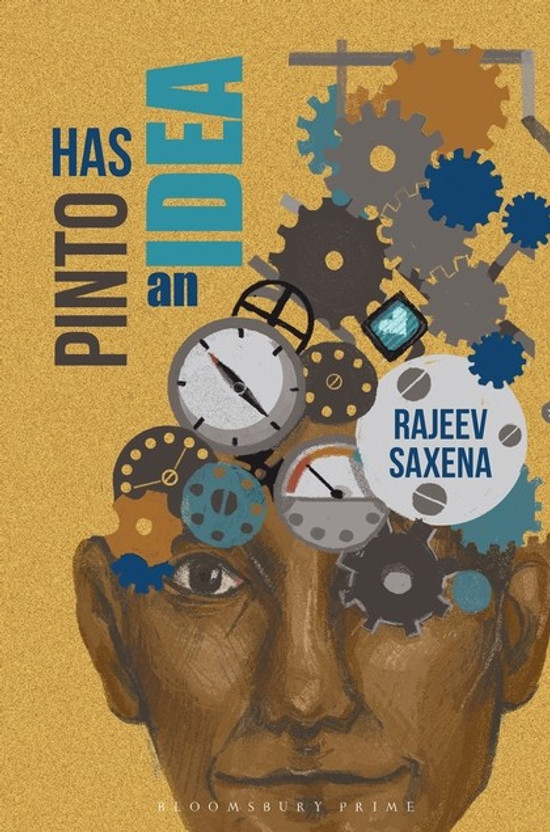
Pinto Has an Idea


Before I can really get into the review, let me tell you - "This book has a potential to become a movie very soon". So, before it becomes a movie and gets compressed losing all the greatness it has in the paper form, read the book. Also, let me state it: I really do not want to get into the story or part of the story to reveal bits and pieces of it. So, my review is mostly from the aspects of the book and why you should read it.


Recently, my kid had a story telling competition at school and the way I had written the first line for her to tell is "Knowledge and presence of mind are power supreme." 'Pinto has an idea' closely matches this line. It narrates the story of an inquisitive Rajat whose nick name is Pinto and his always unquenched thirst for knowledge, to come up with something new, aims to reach people, and the struggles that he had to undergo at many places including his love life. Not sure why they call it usually love chemistry, but this book is a real chemistry mixing science, love and many other stuff.

In India, many of us (or most of us) really excel in theory, and that is because of the fact that our education system gives importance to how much you can memorize and not how much you can practically apply what you learnt. Pinto is different. He always has an idea, excels in studies from school to IIT to MIT, and then throws away everything to invent practical solutions to everyday problems that the society faces. His love Lavanya truly acts as a catalyst to Pinto to do this and more - solve the common problems that are faced by common people (the word 'common' present twice in this one sentence is not oversight). The author has brought out a beautiful point - for anyone having intellect and motivation, nothing is impossible. I am not sure if part of this book represents his own story, but Rajeev Saxena seems to have powerful imagination to bring out so many scientific stuff in a book like this that any non-science person can also easily catch and understand. The choice of characters are very good.

Simplicity is the foremost plus point of this book. Especially, when you are narrating a story of a person that has its roots from a village environment, it ought to be simpler, if not simplest. Secondly, in my opinion, as a reader reads through a book, it must make the reader forget where he is present and change his imagination and the associated environment the same as the one that he is reading. Rajeev has done a great job on both. The language is classic and that increases your pace. And, he brings Pinto right on your eyes as your read, as well the environment that he is in at various points of time whether it is village or city, the Mumbai floods, everything. That gives this novel the liveliness that any novel must have. And, if these reasons are not enough, let me tell you this secret. This book will mostly bring back your own memories as your read the first half.

The book does get little dragging in the middle and towards the end, but the interest to complete the book never goes down. I am reproducing these lines from the book because these lines will tell anyone the essence of this book and Pinto, and not surprisingly, these are the everyday questions in our mind about our own country: "Why were a country's people left so ignorant of their real needs? Why were people so poor? And, why were their cunning leaders allowed to benefit from those so-called shortcomings? And why were people so timid that they didn't put up a fight against those leaders who had been fooling them for three-quarters of a century?" I don't think anything else is needed to invite you to read this gem from Rajeev.

Go, buy and read it. Sure, you will enjoy this one!

Flipkart: https://www.flipkart.com/pinto-has-idea/p/itmexjbkqz5qgq7n?pid=9789386826930

Monday, November 27, 2017

A House For Mr Misra - Review

Each of us have different goals in our life – both personal and professional. When it comes to personal, mostly our goal is to buy a house. Maybe 10-20 years ago, many had building a house; today, not many can afford it. And, imagine having a dream or goal of building a house on the seashore where the sea wakes you up with its own music, talks to you throughout the day and daily sings you a lullaby when you go to sleep! Too much imagination, right? Jaishree Misra is taking us exactly through this dream of hers (or theirs!).

In a land where every application needs to go through twenty departments, and any thing has a law that says “thou shall not do that!” making people resort to loopholes is beautifully narrated in this book. One of the qualities of a book is how best you can see what you are reading, while you are reading. I must say that throughout the book, Jaishree has done a great job. The book starts with bringing a lively London in front of our eyes – the Borough market, Soho, the West End and the Covent Garden; and not to mention the organic juice and the joyful morning walks.


A sudden gear shift occurs when they come to India to build their dream sea-side house – a true sea-side house and not the usual lake-view apartments that we hear all the time in Bangalore where it really means that you can watch all the filth from your own apartment fills the lake. In a 200 page book, it is really impossible to narrate the entire episode of building a house, but for Jaishree, this was doable. The entire cycle of selecting the land, getting approvals, approaching the builder, architect and the staysuits that followed it is beautifully narrated. Sprinkled with subtle humour throughout, and with excellent choice of words, you enthusiastically read without worrying about food, water, rain etc., Be it the maid, the Trivandrum corporation, or the snake-bite night, it makes you laugh and enjoy, and more importantly you forget the zillion problems that you would be thinking about, otherwise.

I loved every bit of this book. I had to go to a place as a guardian to my family (without any business there actually). I started the book at 9 a.m. and I got it done by 2 p.m. I am usually a slow reader, but, for this book, I wasn’t. All credit goes to the author for such a wonderful book, and to Mr.Misra without whom this book wouldn’t have been in the first place as well as the humour that he added to this book.

Sunday, March 26, 2017

Inside Chanakya's Mind by Radhakrishnan Pillai - A Review

Radhakrishnan Pillai seems to have a very simple goal! "I will make Chanakya and his Arthashastra as the foundation for my works, and I will extract the juice and will serve it to you. You can be a student, a business man, a teacher or whoever. It is my simple goal." And, I must agree that he succeeds this time also with "Inside Chanakya's Mind" like his earlier books "Chanakya in Daily Life" and "Corporate Chanakya". Yes, Chanakya's work "Arthashastra" is such a treasure that India and the world are blessed to relish! In his current work, the author focuses on "Aanvikshiki" or the science of thinking. We have frequently heard the quote, "Watch your thoughts, they become words, Watch your words, they become actions; Watch your actions, they become habits…", but no one really told us how to think. All the time we hear about "Think, Think, Think!", but no one really teaches us this art. Pillai fills this gap neatly by dedicating a whole book for this art! (In fact, it is unbelievable that his daughter is named "Aanvikshiki). For those, who have been blaming their family, their company, their neighbors, the neighbor's dog etc., on why they couldn’t think correctly, this book is a boon.


The book starts by explaining the root of Aanvikshiki, what it really means and why is it so important. It pacifies us when we know that "the process of thoughts can be taught" and elates us when we read that the practice of this important art that bring about a significant change in our thoughts, speech and action. Isn't that what we just read in the quote above? The author expands on the beautiful base that he has laid out in the first chapter by explaining the different types of thinking. He wonderfully categorizes the thinking into six different categories and explains each of them. He does it so by referring to Chanankya's quotes & verses from Arthashastra. For example, leadership thinking is all about working for the benefit of others - and, in that sense, a parent is also a leader. And, when you are an individual contributor in a company, you go through the process of creative thinking and so on.

Then comes the different models of thinking. It isn't enough to just categorize the thinking; it also depends on the model how you think through each of these types. The next chapter on the seven dimensions of thinking is a real gem. Chanakya's works were based on the old times - when there was a kingdom and the king ruled with his ministers. But, we call that a democracy and corporate. By explaining these seven dimensions with seven parts of a kingdom - the king, the minister, the country, the city, the treasury, the army and the ally, the author makes our job easy to relate it with the current environment. It is just that we have a different environment and different players. And, in any case, there is going to be a competition - whether we are studying in a school, or working in a corporate. It is very important to hone ourselves with the process of thinking about competition which is more important than the other seven - and the author dedicates one complete chapter (and I am not sure if it is directly proportional to the details Chanakya covering it in his work). There are some important things that we understand are very important, but we neglect - because we are not interested, or often because we do not have enough time. The chapter "The Other Side of Chanakya" helps us with why we must do the stuff that we often ignore. We will not have complaints if everyone follows Chanakya's teachings on management. The author crisply categorizes it the chapter on management - which I think every corporate and government should make it part of their organizational principles.

And, if we think it is all about corporate and its management, no, it is not! Even for individuals who often procrastinate, there are beautiful lessons - the process of decision making, prioritizing work. I think in a social media centric world where virtual friends occupy most of our day (and night), these principles should sharpen our process of thinking to live more on the reality side. All in all, a very good self-help book aimed at improving our process of thinking and our overall welfare (and others).

PS: This book was received, read and reviewed as part of Flipkart’s Blogger Review Program

Friday, December 9, 2016

Exile by Taslima Nasrin - A Review

Freedom - a word that is loosely used by almost everyone today. Freedom of speech, freedom of religion, freedom of expression, freedom of almost everything. Most of the people using it does not know its price. Here, Taslima presents her experience in "Exile" how her freedom was curbed because how her freedom of thoughts and speech was not considered so by whoever is against it.

Exile - A Memoir

Hyderabad, we all know as a city famous for its delicious Biryani changed her fate after one event - a simple book release event. The troubles and struggles that Taslima had encountered to live freely after this one event is the sole essence of this book. She beautifully remembers and lists the conversations that happened post that where even the ruling communists party did not want her to stay in Kolkata. The conversation between Taslima and the then Commissioner of Police induces lot humor, and you will laugh when his sole motivation is to get Taslima out of Kolkata comes out through words like "Go to Europe, Go to America, Go to Kerala".

Human mind and brain are brilliant parts. They can convert threat into an opportunity. The chapter "Death Waits Past the Window" exceptionally portrays this phenomenon. How when the police officers tried to scare Taslima and how her mind beautifully scripted the poems is just beautiful! The rest sixty percent of the book is her diary excerpts. For about four months where she was put in a house arrest in New Delhi (she calls that as Safe House), the people she talked to including the journalists that we all know today - Karan Thapar, Barkha Dutt, Vir Sanghvi. A safe house did not really give her safety as she explains how she was threatened because her phones were tapped, many people who are unknown to her eavesdropped her conversations. A physical torture is worse, but what she refers to "a psychological torture" experience is worst. How helplessly she called everyone that she knows to get out of the safe house and get back even to Bangaladesh from where she was ousted. The letters, conversations, articles, phone chats together form 'Exile'.

It is always interesting to read one's memoir. Taslima's is no exception (she herself says that it cannot act as a source of inspirations like other memoirs) . But, how one interprets freedom of speech is one's own decision, and it may not tally well with yours (after all, everything has its own limit - for example, having driving license in a free country mean you can freely drive at your own will without obeying traffic rules). Also, when it comes to religion, some people are very much tied to what it dictates without even knowing or realizing the meaning. Obviously, a sword cannot be an answer for uttering words against religion because we say that all the religions teach us love. All in all, a beautifully presented memoir which I have read and enjoyed with both agreements and disagreements with Taslima's words.

PS: This book was received, read and reviewed as part of Flipkart’s Blogger Review Program. The opinions in this blog are not forced by the program. It is blog author's own.

Tuesday, November 1, 2016

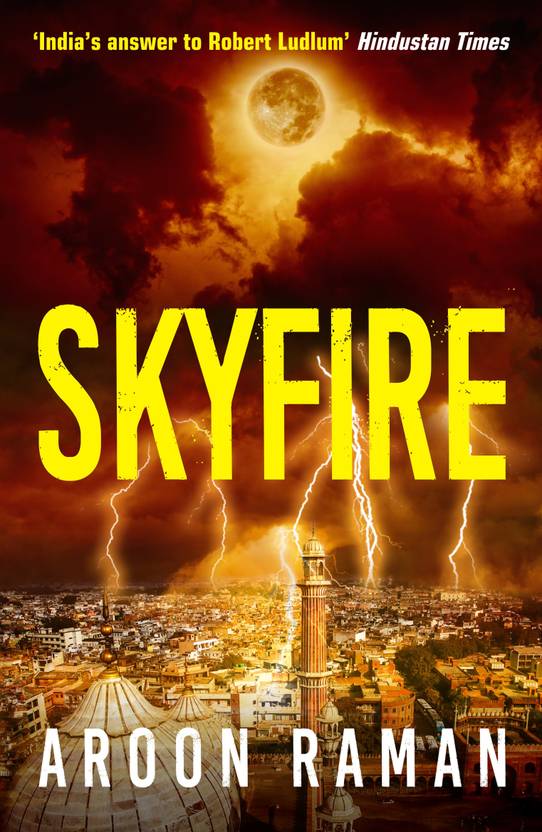
Skyfire by Aroon Raman - A Review

I like fiction thrillers a lot. They keep you glued to the book from the moment you begin to read and until you reach the last page. Aroon Raman's latest book Skyfire fulfils the above statement for the most part. I have not read his earlier ones, but it appears from this book that the same characters continue their quest but in a different case.


I need to be a bit careful in review as this book is a fiction thriller and anything that I mention in this review should not become a spoiler. The plot is simple - there is a crime happening and there is a natural phenomenon happening.  Appreciations to the author for including two issues that plague the society today: child trafficking and weather change.  I am awed by the HAARP that forms the core theme of this book. Except for these concepts, the book largely reminds me of many Tamil films that I have seen while growing starring the superstar. Here, our hero Chandra, a journalist performs that role. 

I am sorry, but I have to be critical of the problems that the book has if it doesn’t reach the No.1 Bookseller place. Every thriller should leave hints to make readers guess who could be the suspect. At the same time, it also must leave more hints to confuse the readers about the possible suspect that makes it more interesting till we reach 95% of the book. In Skyfire, the author leaves a very obvious clue when you are halfway and more clues later and that’s a huge mistake in my opinion. But, this does not prevent you from reading further or minimizes the interest. And, how can all the security people move to the other side during the climax?

If you have read Ashwin Sanghi’s Sialkot Saga, you will probably remember how Bhutan appeared for its positive role. Here, you will be surprised that how a small country like Bhutan can be used easily to thrust illegal technologies to bring down the world. The scenes narrated at Kala mill spreads a horror in our mind, but at the same time, they was hardly any justification of why those horrendous events happened (that’s a missing link certainly). The buildup of events from Gopal missing to Pagal Bhai to Arab Sarai is all narrated extremely well and runs good throughout the book. 

All in all, a nicely written fiction thriller that misses narrowly on few most important points! Sure you can buy it and enjoy it though!

My rating 3.5 / 5 - for the theme, characters and the language.

PS: This book was received, read and reviewed as part of Flipkart’s Blogger Review Program


Saturday, October 22, 2016

When Love Finds You by Yashodhara Lal - A Review

There are peculiar things about corporate environment. You will see all kinds of people - truly knowledgeable and truly hardworking, smart working on one side and people trying to make political moves to move up in the ladder without even understanding the basics. And, there are people like Natasha who are on the other extreme – they are truly hardworking, no-nonsense, no-excuse people but they really lack the most important skill that the corporate world needs – the people’s skill!

When Love Finds You - Yashodhara Lal

 Yashodhara Lal brings #WhereLoveFindsYou. It has all the masala that you need to enjoy a delicious meal. If you are working for any of the corporates, readily I can tell you, you will hate Natasha because you understand that there are people like her everywhere and they don’t know how to appreciate basically, and they don’t know there is something called personal touch and that is more important. But, when you learn that the difficult past and the interpersonal relational difficulties is the reason and can relate it to Natasha’s current behavior, you can’t stop admiring the author. She really brings a very important point here – make sure your (and your kids’ present is good so they won’t suffer torment in their future). Shekar’s small episode makes us realize the pressure that corporate big heads go through while Natasha’s run to succeed at any cost can motivate some people (since we usually only imagine the huge salaries that they get and the posh life that they enjoy).

Multiple characters like Rishabh, Nikhil & Vicky adds life to the book – though I felt Vicky very redundant). I should say more than Rishabh, Nikhil’s presence adds juice to the whole book. Without Nikhil, the book would have been so dry. The interactions with Ms. Chopra adds some humor and that is much appreciated.

The things that didn’t impress me in this book? There are many fictions out there and they don’t let you put down the book once you take it and until you finish them. The main reason is they are mostly unpredictable. But, this one is a mostly predictable story overall. Primarily in software domain, I did not like the names of those companies or the software names like Beckitup! Looked very odd (but this could be a personal thing)! The book cover plays an important role for anyone who shows interest in reading the book. Somehow, just like Yashodhara’s other books, the cover is not that apt. It has to connect to the story's core (and I certainly don’t understand why the author needed to get this one from Shutterstock). (BTW, the best cover that I have seen is from Pepita Seth’s “The Edge of Another World”).

The book is still OK read – relaxes you when you return back after a day’s work! But, somehow when you finish reading this book, it doesn’t stick close to your heart. That’s the missing part!

My rating: 3.5/5

PS: This book was received, read and reviewed as part of Flipkart’s Blogger Review Program


Sunday, September 11, 2016

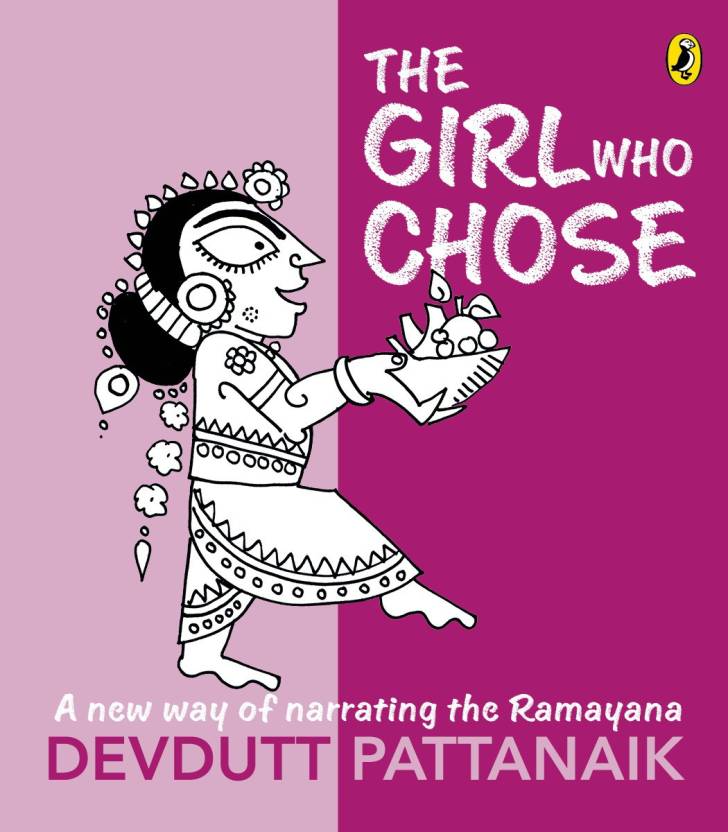
The Girl Who Chose - Devdutt Pattanaik - A Review

For 99.9% of us, Mahabharata and Ramayana are great epics! They are great because they tell the divine stories of the two great manifestations of Lord Vishnu. They are revered because they teach us all how to live on the righteous path without erring (and today's world seems exactly to do the things that are expressively prohibited in these two puranas - grabbing someone else's land & grabbing someone else's lady). Among these two, Ramayana is special because it has been retold by many many poets and authors! After Valmiki gave us this precious purana, from Tulasidas from the north to Kamban in the south, several beautiful narrations stand to give testimony to its greatness. Devdutt Pattanaik adds yet another version (after The Book of Ram) to bring another beautiful version of this great epic.


The author has chosen two words! Yes, two words that were chosen very carefully, and which by the very essence of them rule each one of us from inside, mostly unknowingly. They are rules and choices. Where rules are imposed, choices are ours to make. And, how these choices play a vital role in our lives is the theme of this book. Ramayana has numerous characters present in it. The character that Devdutt chose, though is a well-known (and considered to be the heroine of this epic), whether any of us have associated choices with her is a question.

Yes, Sita - Goddess Lakshmi herself and her choices is the core of this book! The five choices that she makes and how it affects Ramayana is narrated in such a beautiful manner. Her birth is not her choice, but the rest are all her own choices and how and why she made those choices is told from her own standpoint. Whether it is when stepping out of the palace when Ram leaves for the forest, when asked by Lakshman not to cross the "rekha" or when asked by Hanuman to return back with him, these may sound very simple choices, but there is a very sounding reason behind them. One will be able to appreciate the author's way of thinking when he/she finishes the book.

Many a times, it is not easy to narrate a story. But, think of the difficulty when you are narrating it to children. You have to choose (again 'choice' :-)) words in such a way for them to read and grasp easily. This book is written for "young readers" in the age group 6-12. I have six year old and I know the real problems when telling her stories. You get questions that you never have thought of. The author has done a marvelous job in the way he describes the epic. What adds more beauty to this work is the illustrations that came from the author. One can easily appreciate that when we narrate a story to a kid, we are making them picturize the scenes in their mind. The author's own illustrations are so apt to match the picture that the kids will have in their mind when they read the book!

Like every other book that he has written, this book also ensures he stands as India's favorite mythologist! A good read, a must read!

This review is part of Flipkart's Blogger Review Program.

Tuesday, August 23, 2016

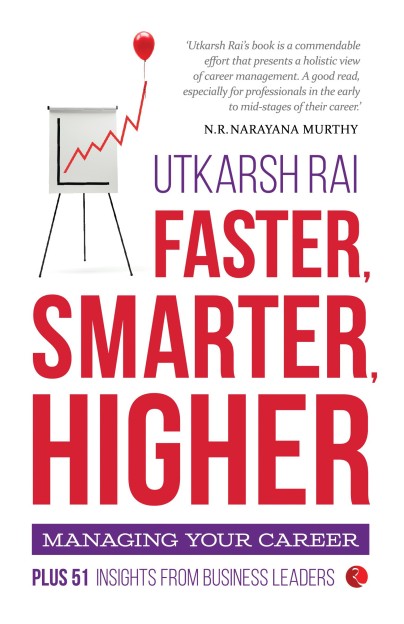
Faster, Smarter, Higher - Utkarsh Rai - A Review

Let's accept it! Everyone goes so a career thrash in one form or the other. IT IS A FACT! When people join a company as freshers, they are enthusiastic, full of energy aspiring to achieve everything under the sky! But, only a few, if any at all, cross the ocean that is dirty, filled with politics and full of frustrations, to have a successful career. And for those of us who find it difficult to cross this ocean and sometimes even getting drowned and lost, Utkarsh Rai brings "Faster, Smarter, Higher - Managing Your Career"!


With eight superb chapters and overall 51 sub-chapters, he has covered everything that it takes to have a successful career. I think most of us will be able to understand the problems that we face every day. They are quite obvious - monotonous work, getting visibility, management issues, managing peers, performance management etc., I must appreciate Mr.Rai for the way that he has presented this - the problem and what can we do about it - because, many times even though the problems are quite obvious, the question we ask ourselves is "So what? I still cannot do anything about it!"

There is a famous saying that "fixing any problem must start with fixing yourself". Rai starts his book with "Managing Self" which is the very essence of this mantra. Presented in a humorous way, this start will give you momentum and set the pace for the rest of the book. The sub-chapters like "You, the brand" gives much confidence that "Yeah, I am also a victim of this, but, I can fix it!. Managers are one important topic in any organization - it is no secret. The chapter "Managing your Manager" gives an impressive overview of how if you understand your manager can help you win your career greatly. No one can exist for long in a career path alone! It is always a team work! Even when you think you are the one executing, it is always your team that completes the cycle for any product. And, if you are a manager with direct reports under you, then managing the team is of utmost importance. Without encouraging and maintaining harmony in your team and knowing what your team is really capable of, what they really want, your career as a manager will be a disaster. Chapter 3 presents this neatly.

A competition is good inside a team, but if that competition turns out to be jealous, any organization will perish. "Managing Your Peers" chapter gives you the dynamics of managing peers. It is not always and not only your manager, but your manager's manager is also very important in your career. It is a very important relationship that has to be maintained well without which you will not be able to raise your concerns properly and in a timely manner. It is absolutely necessary to digest this chapter to avoid our usual whining.

I am not sure if "Managing Manager' Peers" applies to everyone. Usually, it applies to slightly higher levels. So, it did not impress me a lot. Yet, I took it as a good FYI! How to manage everyone not covered so far is a good chapter. It stresses on the fact that you are not independent. If you have previously read "Seven Habits of Highly Successful People" by Stephen Covey, you will be able to appreciate how he explained moving from dependent to independent to interdependent. That’s the same thing the chapter "Managing Others" covers! And, final chapter is a must read for everyone, even if you skip other chapters - it talks about the value that you add and how you can extend your value to have a great career.

In essence, it is not really working hard that matters in any organization, but working smarter (yeah, we have all heard that multiple times)! But, it is with great examples, analogies that Mr. Rai explain this very concept that makes this book a different one and helpful one! Whether you are starting your career or midway through it, this book should stay at your desk or cube so when you feel down sometimes in your career, you know it is there to help you!


Note: This book was sent to me as part of Flipkart Blogger Review Program. It did not impose any restrictions for me to be positive or negative about the book. All the views that you see above is mine and not influenced by anyone else.

Faster, Smarter, Higher - Utkarsh Rai - A Review

Let's accept it! Everyone goes so a career thrash in one form or the other. IT IS A FACT! When people join a company as freshers, they are enthusiastic, full of energy aspiring to achieve everything under the sky! But, only a few, if any at all, cross the ocean that is dirty, filled with politics and full of frustrations, to have a successful career. And for those of us who find it difficult to cross this ocean and sometimes even getting drowned and lost, Utkarsh Rai brings "Faster, Smarter, Higher - Managing Your Career"!


With eight superb chapters and overall 51 sub-chapters, he has covered everything that it takes to have a successful career. I think most of us will be able to understand the problems that we face every day. They are quite obvious - monotonous work, getting visibility, management issues, managing peers, performance management etc., I must appreciate Mr.Rai for the way that he has presented this - the problem and what can we do about it - because, many times even though the problems are quite obvious, the question we ask ourselves is "So what? I still cannot do anything about it!"

There is a famous saying that "fixing any problem must start with fixing yourself". Rai starts his book with "Managing Self" which is the very essence of this mantra. Presented in a humorous way, this start will give you momentum and set the pace for the rest of the book. The sub-chapters like "You, the brand" gives much confidence that "Yeah, I am also a victim of this, but, I can fix it!. Managers are one important topic in any organization - it is no secret. The chapter "Managing your Manager" gives an impressive overview of how if you understand your manager can help you win your career greatly. No one can exist for long in a career path alone! It is always a team work! Even when you think you are the one executing, it is always your team that completes the cycle for any product. And, if you are a manager with direct reports under you, then managing the team is of utmost importance. Without encouraging and maintaining harmony in your team and knowing what your team is really capable of, what they really want, your career as a manager will be a disaster. Chapter 3 presents this neatly.

A competition is good inside a team, but if that competition turns out to be jealous, any organization will perish. "Managing Your Peers" chapter gives you the dynamics of managing peers. It is not always and not only your manager, but your manager's manager is also very important in your career. It is a very important relationship that has to be maintained well without which you will not be able to raise your concerns properly and in a timely manner. It is absolutely necessary to digest this chapter to avoid our usual whining.

I am not sure if "Managing Manager' Peers" applies to everyone. Usually, it applies to slightly higher levels. So, it did not impress me a lot. Yet, I took it as a good FYI! How to manage everyone not covered so far is a good chapter. It stresses on the fact that you are not independent. If you have previously read "Seven Habits of Highly Successful People" by Stephen Covey, you will be able to appreciate how he explained moving from dependent to independent to interdependent. That’s the same thing the chapter "Managing Others" covers! And, final chapter is a must read for everyone, even if you skip other chapters - it talks about the value that you add and how you can extend your value to have a great career.

In essence, it is not really working hard that matters in any organization, but working smarter (yeah, we have all heard that multiple times)! But, it is with great examples, analogies that Mr. Rai explain this very concept that makes this book a different one and helpful one! Whether you are starting your career or midway through it, this book should stay at your desk or cube so when you feel down sometimes in your career, you know it is there to help you!


Note: This book was sent to me as part of Flipkart Blogger Review Program. It did not impose any restrictions for me to be positive or negative about the book. All the views that you see above is mine and not influenced by anyone else.

Friday, June 24, 2016

Losing My Religion by Vishwas Mudagal - A Review

Every one of us comes with some kind of a passion. Even if we do not come with such a passion, we develop one over a period of time. For some, the passion could be a sport, for some others, it could be business, for others, it could me many different things. Many a time, as it normally happens and we have seen, this passion slows down or even dies with time. It could be because of a lot of factors - family, work pressure, health etc., There are only few people that cross all the difficulties, follow their passion diligently no matter what comes on their way and emerge successful. And, this success that means and tastes differently than what we call as success traditionally. Precisely, this is what Vishwas brings out in his fiction "Losing My Religion".


Rishi Rai, the character that Vishwas chose to depict this and more, takes us all through what I will call "a brilliant presentation" of "Secret of Success"! Most of us will agree that what we are today is very different from what we wanted to be, when we crossed our Class 10 or 12! Vishwas tells us a lesson through Rishi. We have often heard that travel makes us feel better. This book stresses that point. The central theme of the book is entrepreneurship. Kudos to the author for not deviating from this theme. Whether it is the game company, or selling coconut, the author brings out this theme throughout the book consistently. The language and the flow are good. Especially, I liked the introduction very much. (I think use of explicit words could be minimized to some extent).

What I thought could be different or better: A fiction while have to keep the audience sitting on the edge and not have spoilers, it better should not surprise (not blacked out) the audience suddenly also. During the actual competition between Wolf's and Rishi's team, I felt it would have been better if the author had left some clues that Rishi's team is working behind the scenes.

The specialty of the book lies in connecting the dots beautifully from the start till the end. Bringing Kumbh Mela in and the business face of it aligns beautifully to the theme (the SMS examples are a little too much and I do not like them, but I do like using the Naga saint for promoting it!). The choice of characters, their introduction, their names are just perfect!Vishwas has done lot of groundwork to understand the business aspects in India and in the US and has presented it in the best manner!


This book has been received, read & reviewed as part of Flipkart's Blogger Review Program.

Wednesday, May 18, 2016

The Wedding Photographer by Sakshama Puri Dhariwal - A Review

Have you ever watched a Romantic Comedy Hollywood & Bollywood movies that makes you relaxed, makes you forget all your worries, laugh out loud and keeps you captivated till the end? Sakshama brings you exactly the same through her fiction “The Wedding Photographer”. With plentiful of wit spread throughout the book, this book will refuse to leave your hand until you hit the last page. And, when you read, you cannot avoid your brain painting pictures of Risha, Arjun, Nitisha, Rohan, Rishabh and Nani in a Bollywood movie. How beautifully the words we read in this fiction gets converted to scenes? That’s the power of Sakshama’s writing.


The language used in this book is simple yet rich. Wherever required, the Indian touch is given by using ‘Punjabi’ in the dialogues (which in my opinion is the best instead of English which misses out the wit during translation). Nani’s language ‘pat name’, ‘most worst organization’, ‘just most worst organization’ almost made me ROFL. With a load of entertainment of a Punjabi wedding, and with some twists, the books stands tall among all other Romantic Comedy fictions!

It also portrays how ego plays a very important role in many relations. If only that ego curtain goes off, the life will be pleasant and lovely! Risha’s and Arjun’s characters stress this fact in every single instance in this book! It will also make all of us, stop a moment and introspect ourselves. We have our work, and we have our own passion. Many times, we forget the passion with the mounting work pressure. Sakshama neatly depicts this through Risha (and indirectly says such people are like Arjun). It also tells you a lot about life! Life is what we make out of it! Whoever feels stressed out at the end of the day, I strongly suggest, buy a copy of this book and read some 10-20 pages at the end of your day. I bet all your anxiety & stress will be washed away!


Sakshama, you only need a producer to convert this into a sooper-dooper Bollywood movie! Hope that day comes soon! Candy & Nani will stay in our minds until we read the next romantic comedy. Looking forward to your next one!


The book was sent to me by Flipkart Blogger Review Program.

Wednesday, April 27, 2016

Sialkot Saga by Ashwin Sanghi - A Review

Sialkot Saga by Ashwin Sanghi - Cover

India's history has lot of events spread over the past seven decades. It has even lot more if you include the time when kings ruled this great nation. For many of us in the current generation, history is what we read and learnt in the social science class - mostly memorized. Business, unless it interests you when you are brought up, is a difficult thing to grasp. Even when we read a thousand books on business, the basic concepts if not inculcated right in the beginning years, will always make us feel timid when attempting new things. Similarly, many of us are timid when we grow up! Once some event happens to challenge that limitation, we become strong and forever! Sanghi presents Arvind and Arbaaz to depict these two sides. What happens when their lives meet is the plot.

It is not unusual for us to see many such plots in movies, or read in books. Yet, what makes this book interesting? It is the way that Ashwin has intertwined the historical events with the stories of Arvind and Arbaaz. A business man learns from his cues on what is going in the state - it is based on lot of factors, but the characteristic of the ruler is an important fact. Ashwin presents this fact to us through Arvind. What is Lal Bahadur Shastri's character, and what will be his first job and ties it to business investments. It also presents in detail the development stages that our great nation has gone through in different periods (yet, wondering why is it still a developing country; with all these happenings in the past six decades we should have been 2x developed by now). One could easily realize that a great research has gone into the writing of this book! Great job, Ashwin!

Arbaaz's story presents us with the dark side of Bombay. How dons rule it, and how they don't even think about finishing off people that stand in their path! One has to have right person on his side here too, for their own development. Abdul gets Arbaaz, and Arbaaz gets Murali. Arbaaz's and Arvind's love with Paromita adds softness to the book (the way Arvind & Paromita communicates their love through periodic table is awesome!). With excellent plots and turns, there is never a time when you feel like putting down the book (I know, we need to - to attend our work, or family matters, or get some rest. If these things are not there, one could finish this book in a 10 hour marathon read).

Coupled with the snippets from the period of Ashoka, Samudragupta, Harsha and all the way till Thiruvananthapuram, the reader will be able to degust this book certainly. We do feel happy when we see Arvind and Arbaaz listed in Forbes top 20, and also get emotional when Arvind's life comes to an end! That explains the power of Ashwin's writing. All in all - a beautiful fiction with a good mixture of history, business, crime, love, hate, politics, emotions!

Some animals hunt. Some animals hide. Few animals hide and hunt! Similarly, some writers write. Some writers entertain. Only few writes and entertains! Sanghi is part of this group!

Tuesday, April 19, 2016

Murder in Amaravati by Sharath Komaraju - A Review


It is the same April. It is the same summer. It is the same me. Only one difference is it is about 18 years ago. That's the time when I started reading books (really too late, I agree). Those were Tamil novels. And, those were crime novels by Pattukkottai Prabakar & Rajesh Kumar (google for them if you don't know). From that time on, crime novels have become a passion for me (yes, over a period of time, the genres expanded, but there is no way you can take out "crime" from that list). Sharath beautifully brought back my memories that I have just written above.

Since, this is a crime novel, it is very important for me to make sure that I do not leave any spoilers in my review! So, my review will only touch the peculiarities of this one. Living in a congested city like Bangalore, and being querulous about traffic, infrastructure issues, water problems etc., always, Sharath takes us to our dream village "Amaravati" and I felt the breeze emanating from Krishna by sitting under that 'Tree'! And, I forgot, for the rest of the period that I read and completed the book, that I am in Bangalore. Beautiful, Sharath! You bring back my childhood memories!

Any crime novel must have three things in my opinion. (1) A good plot, (2) Not able to guess where is the clue (3) Not able to guess who is the culprit. In a peaceful village like Amaravati, a sudden matutinal murder happens, at a place that no one expects. So, obviously, there is a good plot. From the beginning every single talk, every single object appears to our eyes that "that's odd, that's probably kenspeckle to solve this". And, as you read through each character, your mind starts thinking "Ah, this person is the one who did this! Sure, his motivation is superior to others'". Our mind works faster than Venkat Reddy, the investigator, in this murder case. And, we start putting two and two together and come to the conclusion only to know that we have another one to suspect. Finally, the murderer is some one that many of us might not even have suspected (I exclude myself, because I got a hunch from a hint in the chapter on this character, though as I moved further I suspected others too - so now you know how interesting is this book :-))

The book always keeps us at edge of the seat, and never allowed us to put it down. "Motive, Means & Opportunity" - How beautifully Sharath summarizes it -the three essential things that makes a crime possible (and hence made this book possible too). If at all there is anything that the author can do better, it is the language that can be polished a bit, and avoid redundancies (as in explaining some stuff). I read in the back cover that "Murder in Amaravati" is Sharath's first novel. Kudos to him! I also came to know that he has written more novels after this one, so, I will add them to my reading list queue.

I rate it 4/5.
Plot             - 4.5/5
Characters - 4.5/5
Language   - 3/5