Sunday, May 20, 2018

You Can Achieve More by Shiv Khera


Shiv Khera - the name that easily reminds us of the famous title "You Can Win!" Though there are few more titles that he wrote, "You Can Win!" goes synonymous with his name. Now, that is all set to change, with his new book "You Can Achieve More: Live by Design; Not by Default!". Whoever is in a professional job, especially, the engineering professionals would know how difficult it is to move ahead in the career. Mainly, it is the lack of clarity on what he or she can do to move ahead. And, if you share the same concern, then this book is for you. With a 23 well-crafted chapters, each well-organized and richly filled with examples and anecdotes, Shiv inspires us to take the next step.

The book starts with talking about the very attitude that we all have, saying attitude is the most important thing that decides who we are, and whether we can win. Most of the times, we all feel that we are limited by circumstances, or the people around us, but we never think beyond that. There, Shiv gives the beautiful idea to bring a win-win situation for everyone and everything involved: Change your attitude and things will be pleasant. The next couple of chapters go into the aspect of ‘Life’. The core theme of the book “Live by design and not by default” begins here. The whole point of these chapters is to see those opportunities and grab them. We all come into this life with whatever was given to us, and it is up to us to see what we can make out of those resources. And, this depends on the choices that we make – the design!

I am quite surprised by the chapter that talks about “Spirituality”. You often don’t see a lecture on spirituality in a book on personality development. The author insists on spirituality as the way of life. The next chapter talks about the mind, and the importance of brining in positivity and remove all those negative things that the mind accumulates or has accumulated. And, unless the latter happens, we are limiting ourselves on whatever we are doing or aspiring to do. The chapter on “Making the winner” lists the qualities that everyone must possess to be the winner. The author, in another chapter, also lists the mistakes that one should avoid that prevent us from reaching our goal. The book also emphasizes the values that should be part of our life. Especially, the chapter title itself explains what it is going to explain: “Valuations change, but values don’t”. The character that we need to possess, and the unethical stuff that we need to eliminate forms most important part of achieving more. Unless, we emulate the goodness in the lives like being trustworthy, ethical, with integrity etc., we always hold ourselves. And, beautifully here, integrity finds a whole chapter dedicated to it. The organizational head that I work for stands as an epitome of the principles that are listed here and for him integrity is the foremost.

Many a times, we are on our right path to achieve more, but we forget the most important thing as we go along that path – the balance. We don’t usually feel the importance of balance, but just for a moment if we think, this balance can help us achieve more because we get all the strength and energy from the people that surrounds us and inspires us to do more. It also acts to help us on our mental (st)ability. My first boss used to say, activity is not accomplishment. We are all busy doesn’t mean we are achieving. Over a time, we should stop take a look back and see how far we have come and if our efforts are rewarding. And, if they are, we should take a moment to be proud. And, in our path to achieve more, we should see if we are happy. The author, as he mentions in the introduction (that happiness is defined by three factors: Good Health, Good Wealth and Good Relationships) has dedicated a chapter for wealth. We need to be extremely prosperity consciousness and that is explained by a load of theories on the mistakes that we make and how to overcome them.

If you have been part of the corporate team meetings, you would have heard the word “proactive” a lot. That is of utmost importance as per the author, along with time control. The cost of procrastination is too much: it takes a hit on health, wealth, relationships, work everything. Above all, making good decisions at right time leads you to your goal and helps you leave a legacy for your next generation and followers. The author has beautifully presented. He has in fact mentioned it very clearly that this is a not a book that you should rush to finish. You should take your time to go through each page (several times if necessary), digest it and put the learnings in to action.

Well done, Sir! I am sure you have achieved more than “You Can Win!” with this book!

Friday, January 26, 2018

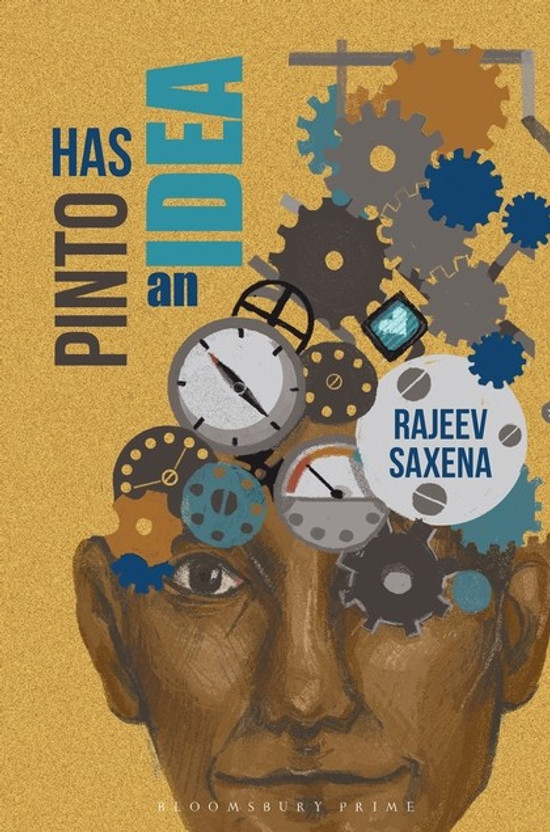
Pinto Has an Idea


Before I can really get into the review, let me tell you - "This book has a potential to become a movie very soon". So, before it becomes a movie and gets compressed losing all the greatness it has in the paper form, read the book. Also, let me state it: I really do not want to get into the story or part of the story to reveal bits and pieces of it. So, my review is mostly from the aspects of the book and why you should read it.


Recently, my kid had a story telling competition at school and the way I had written the first line for her to tell is "Knowledge and presence of mind are power supreme." 'Pinto has an idea' closely matches this line. It narrates the story of an inquisitive Rajat whose nick name is Pinto and his always unquenched thirst for knowledge, to come up with something new, aims to reach people, and the struggles that he had to undergo at many places including his love life. Not sure why they call it usually love chemistry, but this book is a real chemistry mixing science, love and many other stuff.

In India, many of us (or most of us) really excel in theory, and that is because of the fact that our education system gives importance to how much you can memorize and not how much you can practically apply what you learnt. Pinto is different. He always has an idea, excels in studies from school to IIT to MIT, and then throws away everything to invent practical solutions to everyday problems that the society faces. His love Lavanya truly acts as a catalyst to Pinto to do this and more - solve the common problems that are faced by common people (the word 'common' present twice in this one sentence is not oversight). The author has brought out a beautiful point - for anyone having intellect and motivation, nothing is impossible. I am not sure if part of this book represents his own story, but Rajeev Saxena seems to have powerful imagination to bring out so many scientific stuff in a book like this that any non-science person can also easily catch and understand. The choice of characters are very good.

Simplicity is the foremost plus point of this book. Especially, when you are narrating a story of a person that has its roots from a village environment, it ought to be simpler, if not simplest. Secondly, in my opinion, as a reader reads through a book, it must make the reader forget where he is present and change his imagination and the associated environment the same as the one that he is reading. Rajeev has done a great job on both. The language is classic and that increases your pace. And, he brings Pinto right on your eyes as your read, as well the environment that he is in at various points of time whether it is village or city, the Mumbai floods, everything. That gives this novel the liveliness that any novel must have. And, if these reasons are not enough, let me tell you this secret. This book will mostly bring back your own memories as your read the first half.

The book does get little dragging in the middle and towards the end, but the interest to complete the book never goes down. I am reproducing these lines from the book because these lines will tell anyone the essence of this book and Pinto, and not surprisingly, these are the everyday questions in our mind about our own country: "Why were a country's people left so ignorant of their real needs? Why were people so poor? And, why were their cunning leaders allowed to benefit from those so-called shortcomings? And why were people so timid that they didn't put up a fight against those leaders who had been fooling them for three-quarters of a century?" I don't think anything else is needed to invite you to read this gem from Rajeev.

Go, buy and read it. Sure, you will enjoy this one!

Flipkart: https://www.flipkart.com/pinto-has-idea/p/itmexjbkqz5qgq7n?pid=9789386826930

Monday, November 27, 2017

A House For Mr Misra - Review

Each of us have different goals in our life – both personal and professional. When it comes to personal, mostly our goal is to buy a house. Maybe 10-20 years ago, many had building a house; today, not many can afford it. And, imagine having a dream or goal of building a house on the seashore where the sea wakes you up with its own music, talks to you throughout the day and daily sings you a lullaby when you go to sleep! Too much imagination, right? Jaishree Misra is taking us exactly through this dream of hers (or theirs!).

In a land where every application needs to go through twenty departments, and any thing has a law that says “thou shall not do that!” making people resort to loopholes is beautifully narrated in this book. One of the qualities of a book is how best you can see what you are reading, while you are reading. I must say that throughout the book, Jaishree has done a great job. The book starts with bringing a lively London in front of our eyes – the Borough market, Soho, the West End and the Covent Garden; and not to mention the organic juice and the joyful morning walks.


A sudden gear shift occurs when they come to India to build their dream sea-side house – a true sea-side house and not the usual lake-view apartments that we hear all the time in Bangalore where it really means that you can watch all the filth from your own apartment fills the lake. In a 200 page book, it is really impossible to narrate the entire episode of building a house, but for Jaishree, this was doable. The entire cycle of selecting the land, getting approvals, approaching the builder, architect and the staysuits that followed it is beautifully narrated. Sprinkled with subtle humour throughout, and with excellent choice of words, you enthusiastically read without worrying about food, water, rain etc., Be it the maid, the Trivandrum corporation, or the snake-bite night, it makes you laugh and enjoy, and more importantly you forget the zillion problems that you would be thinking about, otherwise.

I loved every bit of this book. I had to go to a place as a guardian to my family (without any business there actually). I started the book at 9 a.m. and I got it done by 2 p.m. I am usually a slow reader, but, for this book, I wasn’t. All credit goes to the author for such a wonderful book, and to Mr.Misra without whom this book wouldn’t have been in the first place as well as the humour that he added to this book.

Sunday, March 26, 2017

Inside Chanakya's Mind by Radhakrishnan Pillai - A Review

Radhakrishnan Pillai seems to have a very simple goal! "I will make Chanakya and his Arthashastra as the foundation for my works, and I will extract the juice and will serve it to you. You can be a student, a business man, a teacher or whoever. It is my simple goal." And, I must agree that he succeeds this time also with "Inside Chanakya's Mind" like his earlier books "Chanakya in Daily Life" and "Corporate Chanakya". Yes, Chanakya's work "Arthashastra" is such a treasure that India and the world are blessed to relish! In his current work, the author focuses on "Aanvikshiki" or the science of thinking. We have frequently heard the quote, "Watch your thoughts, they become words, Watch your words, they become actions; Watch your actions, they become habits…", but no one really told us how to think. All the time we hear about "Think, Think, Think!", but no one really teaches us this art. Pillai fills this gap neatly by dedicating a whole book for this art! (In fact, it is unbelievable that his daughter is named "Aanvikshiki). For those, who have been blaming their family, their company, their neighbors, the neighbor's dog etc., on why they couldn’t think correctly, this book is a boon.


The book starts by explaining the root of Aanvikshiki, what it really means and why is it so important. It pacifies us when we know that "the process of thoughts can be taught" and elates us when we read that the practice of this important art that bring about a significant change in our thoughts, speech and action. Isn't that what we just read in the quote above? The author expands on the beautiful base that he has laid out in the first chapter by explaining the different types of thinking. He wonderfully categorizes the thinking into six different categories and explains each of them. He does it so by referring to Chanankya's quotes & verses from Arthashastra. For example, leadership thinking is all about working for the benefit of others - and, in that sense, a parent is also a leader. And, when you are an individual contributor in a company, you go through the process of creative thinking and so on.

Then comes the different models of thinking. It isn't enough to just categorize the thinking; it also depends on the model how you think through each of these types. The next chapter on the seven dimensions of thinking is a real gem. Chanakya's works were based on the old times - when there was a kingdom and the king ruled with his ministers. But, we call that a democracy and corporate. By explaining these seven dimensions with seven parts of a kingdom - the king, the minister, the country, the city, the treasury, the army and the ally, the author makes our job easy to relate it with the current environment. It is just that we have a different environment and different players. And, in any case, there is going to be a competition - whether we are studying in a school, or working in a corporate. It is very important to hone ourselves with the process of thinking about competition which is more important than the other seven - and the author dedicates one complete chapter (and I am not sure if it is directly proportional to the details Chanakya covering it in his work). There are some important things that we understand are very important, but we neglect - because we are not interested, or often because we do not have enough time. The chapter "The Other Side of Chanakya" helps us with why we must do the stuff that we often ignore. We will not have complaints if everyone follows Chanakya's teachings on management. The author crisply categorizes it the chapter on management - which I think every corporate and government should make it part of their organizational principles.

And, if we think it is all about corporate and its management, no, it is not! Even for individuals who often procrastinate, there are beautiful lessons - the process of decision making, prioritizing work. I think in a social media centric world where virtual friends occupy most of our day (and night), these principles should sharpen our process of thinking to live more on the reality side. All in all, a very good self-help book aimed at improving our process of thinking and our overall welfare (and others).

PS: This book was received, read and reviewed as part of Flipkart’s Blogger Review Program

Friday, December 9, 2016

Exile by Taslima Nasrin - A Review

Freedom - a word that is loosely used by almost everyone today. Freedom of speech, freedom of religion, freedom of expression, freedom of almost everything. Most of the people using it does not know its price. Here, Taslima presents her experience in "Exile" how her freedom was curbed because how her freedom of thoughts and speech was not considered so by whoever is against it.

Exile - A Memoir

Hyderabad, we all know as a city famous for its delicious Biryani changed her fate after one event - a simple book release event. The troubles and struggles that Taslima had encountered to live freely after this one event is the sole essence of this book. She beautifully remembers and lists the conversations that happened post that where even the ruling communists party did not want her to stay in Kolkata. The conversation between Taslima and the then Commissioner of Police induces lot humor, and you will laugh when his sole motivation is to get Taslima out of Kolkata comes out through words like "Go to Europe, Go to America, Go to Kerala".

Human mind and brain are brilliant parts. They can convert threat into an opportunity. The chapter "Death Waits Past the Window" exceptionally portrays this phenomenon. How when the police officers tried to scare Taslima and how her mind beautifully scripted the poems is just beautiful! The rest sixty percent of the book is her diary excerpts. For about four months where she was put in a house arrest in New Delhi (she calls that as Safe House), the people she talked to including the journalists that we all know today - Karan Thapar, Barkha Dutt, Vir Sanghvi. A safe house did not really give her safety as she explains how she was threatened because her phones were tapped, many people who are unknown to her eavesdropped her conversations. A physical torture is worse, but what she refers to "a psychological torture" experience is worst. How helplessly she called everyone that she knows to get out of the safe house and get back even to Bangaladesh from where she was ousted. The letters, conversations, articles, phone chats together form 'Exile'.

It is always interesting to read one's memoir. Taslima's is no exception (she herself says that it cannot act as a source of inspirations like other memoirs) . But, how one interprets freedom of speech is one's own decision, and it may not tally well with yours (after all, everything has its own limit - for example, having driving license in a free country mean you can freely drive at your own will without obeying traffic rules). Also, when it comes to religion, some people are very much tied to what it dictates without even knowing or realizing the meaning. Obviously, a sword cannot be an answer for uttering words against religion because we say that all the religions teach us love. All in all, a beautifully presented memoir which I have read and enjoyed with both agreements and disagreements with Taslima's words.

PS: This book was received, read and reviewed as part of Flipkart’s Blogger Review Program. The opinions in this blog are not forced by the program. It is blog author's own.

Tuesday, November 1, 2016

Skyfire by Aroon Raman - A Review

I like fiction thrillers a lot. They keep you glued to the book from the moment you begin to read and until you reach the last page. Aroon Raman's latest book Skyfire fulfils the above statement for the most part. I have not read his earlier ones, but it appears from this book that the same characters continue their quest but in a different case.


I need to be a bit careful in review as this book is a fiction thriller and anything that I mention in this review should not become a spoiler. The plot is simple - there is a crime happening and there is a natural phenomenon happening.  Appreciations to the author for including two issues that plague the society today: child trafficking and weather change.  I am awed by the HAARP that forms the core theme of this book. Except for these concepts, the book largely reminds me of many Tamil films that I have seen while growing starring the superstar. Here, our hero Chandra, a journalist performs that role. 

I am sorry, but I have to be critical of the problems that the book has if it doesn’t reach the No.1 Bookseller place. Every thriller should leave hints to make readers guess who could be the suspect. At the same time, it also must leave more hints to confuse the readers about the possible suspect that makes it more interesting till we reach 95% of the book. In Skyfire, the author leaves a very obvious clue when you are halfway and more clues later and that’s a huge mistake in my opinion. But, this does not prevent you from reading further or minimizes the interest. And, how can all the security people move to the other side during the climax?

If you have read Ashwin Sanghi’s Sialkot Saga, you will probably remember how Bhutan appeared for its positive role. Here, you will be surprised that how a small country like Bhutan can be used easily to thrust illegal technologies to bring down the world. The scenes narrated at Kala mill spreads a horror in our mind, but at the same time, they was hardly any justification of why those horrendous events happened (that’s a missing link certainly). The buildup of events from Gopal missing to Pagal Bhai to Arab Sarai is all narrated extremely well and runs good throughout the book. 

All in all, a nicely written fiction thriller that misses narrowly on few most important points! Sure you can buy it and enjoy it though!

My rating 3.5 / 5 - for the theme, characters and the language.

PS: This book was received, read and reviewed as part of Flipkart’s Blogger Review Program


Saturday, October 22, 2016

When Love Finds You by Yashodhara Lal - A Review

There are peculiar things about corporate environment. You will see all kinds of people - truly knowledgeable and truly hardworking, smart working on one side and people trying to make political moves to move up in the ladder without even understanding the basics. And, there are people like Natasha who are on the other extreme – they are truly hardworking, no-nonsense, no-excuse people but they really lack the most important skill that the corporate world needs – the people’s skill!

When Love Finds You - Yashodhara Lal

 Yashodhara Lal brings #WhereLoveFindsYou. It has all the masala that you need to enjoy a delicious meal. If you are working for any of the corporates, readily I can tell you, you will hate Natasha because you understand that there are people like her everywhere and they don’t know how to appreciate basically, and they don’t know there is something called personal touch and that is more important. But, when you learn that the difficult past and the interpersonal relational difficulties is the reason and can relate it to Natasha’s current behavior, you can’t stop admiring the author. She really brings a very important point here – make sure your (and your kids’ present is good so they won’t suffer torment in their future). Shekar’s small episode makes us realize the pressure that corporate big heads go through while Natasha’s run to succeed at any cost can motivate some people (since we usually only imagine the huge salaries that they get and the posh life that they enjoy).

Multiple characters like Rishabh, Nikhil & Vicky adds life to the book – though I felt Vicky very redundant). I should say more than Rishabh, Nikhil’s presence adds juice to the whole book. Without Nikhil, the book would have been so dry. The interactions with Ms. Chopra adds some humor and that is much appreciated.

The things that didn’t impress me in this book? There are many fictions out there and they don’t let you put down the book once you take it and until you finish them. The main reason is they are mostly unpredictable. But, this one is a mostly predictable story overall. Primarily in software domain, I did not like the names of those companies or the software names like Beckitup! Looked very odd (but this could be a personal thing)! The book cover plays an important role for anyone who shows interest in reading the book. Somehow, just like Yashodhara’s other books, the cover is not that apt. It has to connect to the story's core (and I certainly don’t understand why the author needed to get this one from Shutterstock). (BTW, the best cover that I have seen is from Pepita Seth’s “The Edge of Another World”).

The book is still OK read – relaxes you when you return back after a day’s work! But, somehow when you finish reading this book, it doesn’t stick close to your heart. That’s the missing part!

My rating: 3.5/5

PS: This book was received, read and reviewed as part of Flipkart’s Blogger Review Program